
What happens during a bathroom remodel
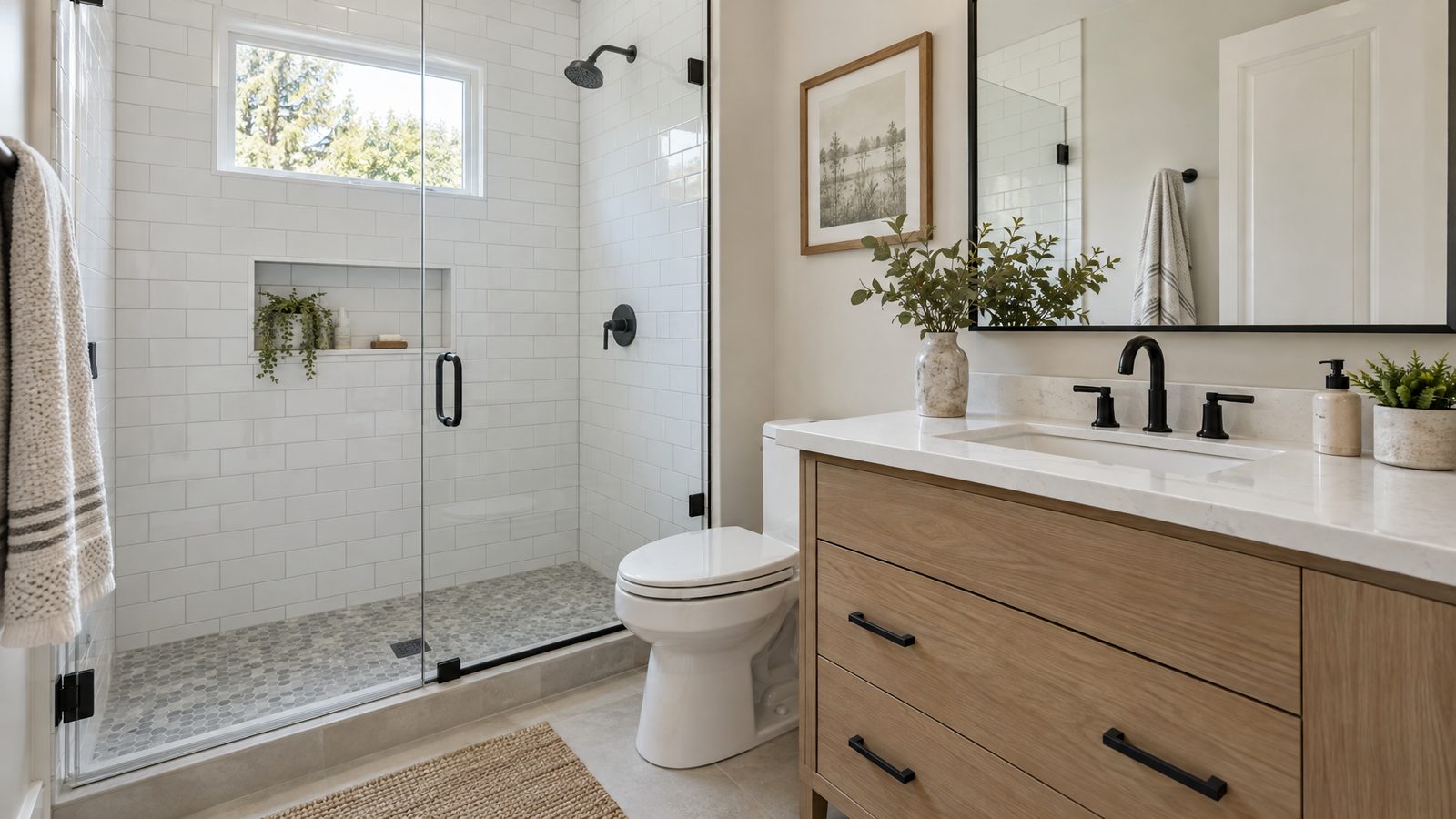
"Bathroom remodel" can mean anything from new fixtures and a coat of paint to taking the room back to the studs. Knowing roughly what each kind of project involves, and the order the work tends to follow, makes the first conversations with a contractor a lot easier.
Three sizes of bathroom project
A refresh
A refresh keeps the layout and most of the surfaces as they are. It might include a new vanity, faucets, lighting, mirror, paint and accessories. Because the plumbing stays where it is, this is usually the quickest and least disruptive kind of bathroom project.
A tub or shower replacement
Some projects focus on the bathing area alone: swapping an old tub for a new one, converting a tub into a walk-in shower, or replacing a shower enclosure. The rest of the room may stay largely untouched, although the floor and wall finishes around the new tub or shower are often part of the job.
A full remodel
A full remodel replaces most or all of the room: fixtures, surfaces, lighting and sometimes the layout itself. Moving a toilet, a shower or a sink to a new spot means moving plumbing, which usually makes the project larger and more involved.
The order the work usually follows
Every project is different, but a full bathroom remodel tends to move through these stages:
- Planning and selections. Agreeing the layout and choosing tile, fixtures, the vanity and lighting. Some items take time to arrive, so they are often ordered early.
- Permits. Many places require a permit for plumbing or electrical work. Contractors usually know what applies locally.
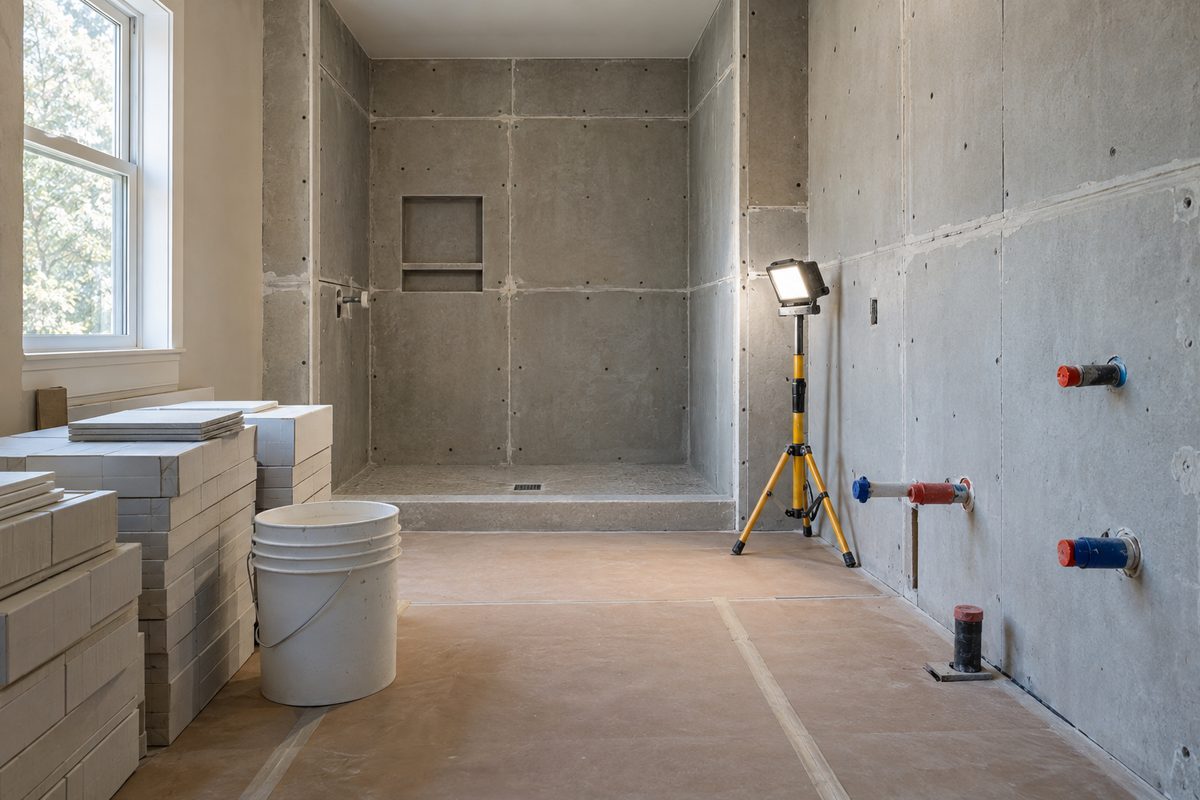
- Demolition. Removing the old fixtures and finishes, and protecting the rest of the house from dust.
- Rough-in. Running or moving pipes, drains, wiring and ventilation inside the walls and floor.
- Inspections. Where a permit is in place, an inspector may check the rough-in work before the walls are closed up.
- Walls, floor and waterproofing. Installing backer board and a waterproofing layer in wet areas such as the shower.
- Tile and surfaces. Laying floor and wall tile, then grouting.
- Fixtures and vanity. Setting the toilet, vanity, sink, faucets, shower glass and lighting.
- Finishing touches. Paint, trim, mirrors and accessories.
- Final walkthrough. Going over the finished room together and noting anything left to finish, often called a "punch list".
How long does it take?
It depends heavily on the size of the project. A simple fixture swap can take a matter of days, while a full remodel can run to several weeks, especially if materials are on back order or inspections need to be scheduled. Contractors usually give an expected timeline in their quote.
Living with a bathroom remodel
If the bathroom being remodeled is the only one in the home, it helps to talk through the plan with the contractor before work starts: when the room will be out of use, and whether any facilities can stay working along the way. Dust, noise and trades coming and going are a normal part of the process.
Choosing materials
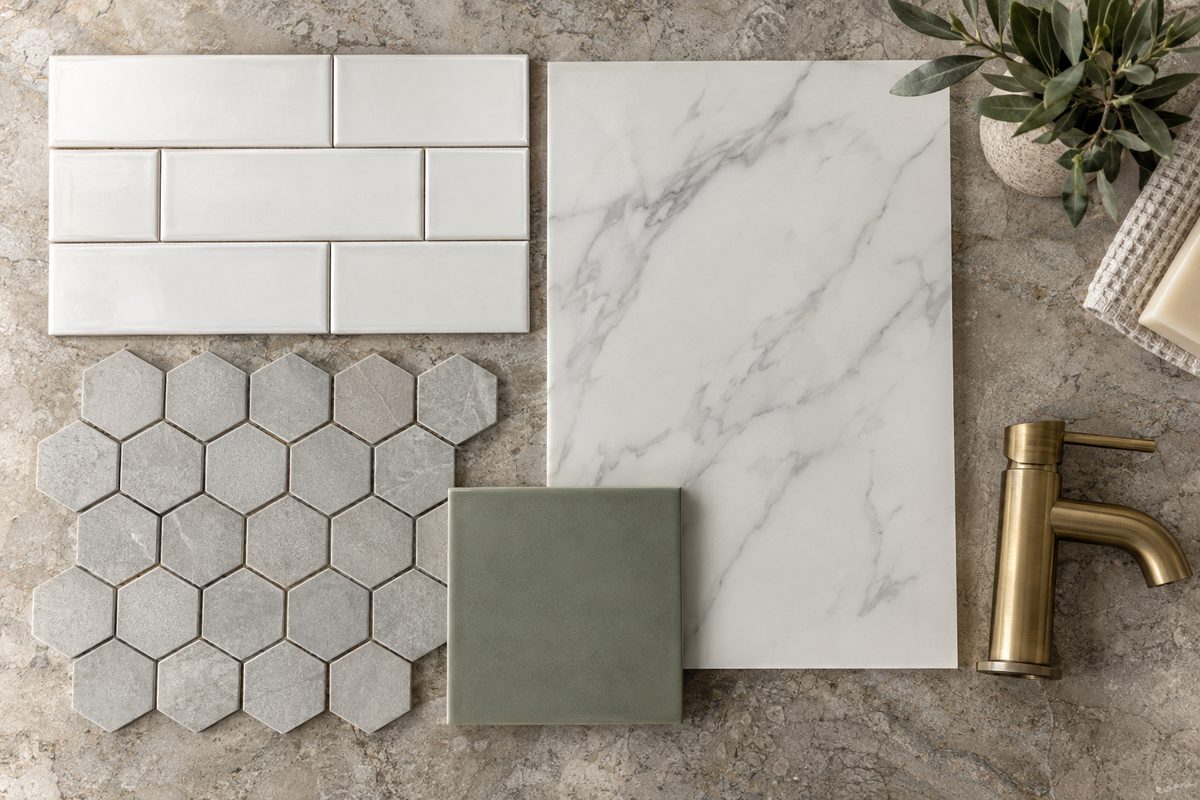
Most of the choices in a bathroom come down to look, feel and upkeep. Porcelain and ceramic tile are common on floors and walls, natural stone gives a different look and finish, and large-format tiles mean fewer grout lines. Vanities come in many sizes and finishes, and fixtures range from brushed nickel to matte black and brass.
Questions homeowners often ask a bathroom contractor
- Which parts of the room will be replaced, and which will stay?
- Will any plumbing or electrical work be moved, and does it need a permit?
- How will the shower area be waterproofed?
- Which materials do I need to choose, and by when?
- When will the bathroom be out of use, and for how long?
When quotes come in, our guide on comparing contractor quotes can help line them up.
General information only, not professional advice. Every home is different. Talk to a licensed professional about your home before making decisions about any work.