
A homeowner's glossary of home improvement terms

Contractors' quotes and product sheets are full of trade terms. This glossary explains the ones homeowners come across most often in window, roofing, bathroom and kitchen projects, in plain English and in alphabetical order.
- Argon (and krypton) fill
- An inert, colorless gas sealed between the panes of some multi-pane windows in place of air. Because it is denser than air, it slows the movement of heat across the gap between the panes.
- Backer board
- A cement-based or similar panel installed on bathroom walls and floors as a stable base for tile, especially in wet areas.
- Backsplash
- The wall surface between a countertop and the wall cabinets above it, usually tiled or covered in a material that is easy to wipe clean.
- Casement window
- A window hinged on one side that swings outward, usually opened with a crank or lever. See our guide to window styles and frame materials.
- Change order
- A written agreement to change the original scope of work, price or timeline once a project is under way.
- Double-hung window
- A window with two sashes that both slide up and down. In a single-hung window, only the bottom sash moves.
- Drip edge
- Metal trim installed along the edges of a roof to direct water away from the fascia and into the gutters.
- Flashing
- Thin pieces of metal or other material used to seal joints and edges where water could get in, such as around chimneys, skylights, windows and roof valleys.
- Full-frame replacement
- Replacing a window by removing the old unit down to the rough opening and installing a complete new window, frame and all.
- Grout
- The material that fills the joints between tiles. It comes in many colors, and some types are made to resist staining.
- Insert replacement
- Replacing a window by fitting a new unit inside the existing frame, which stays in place.
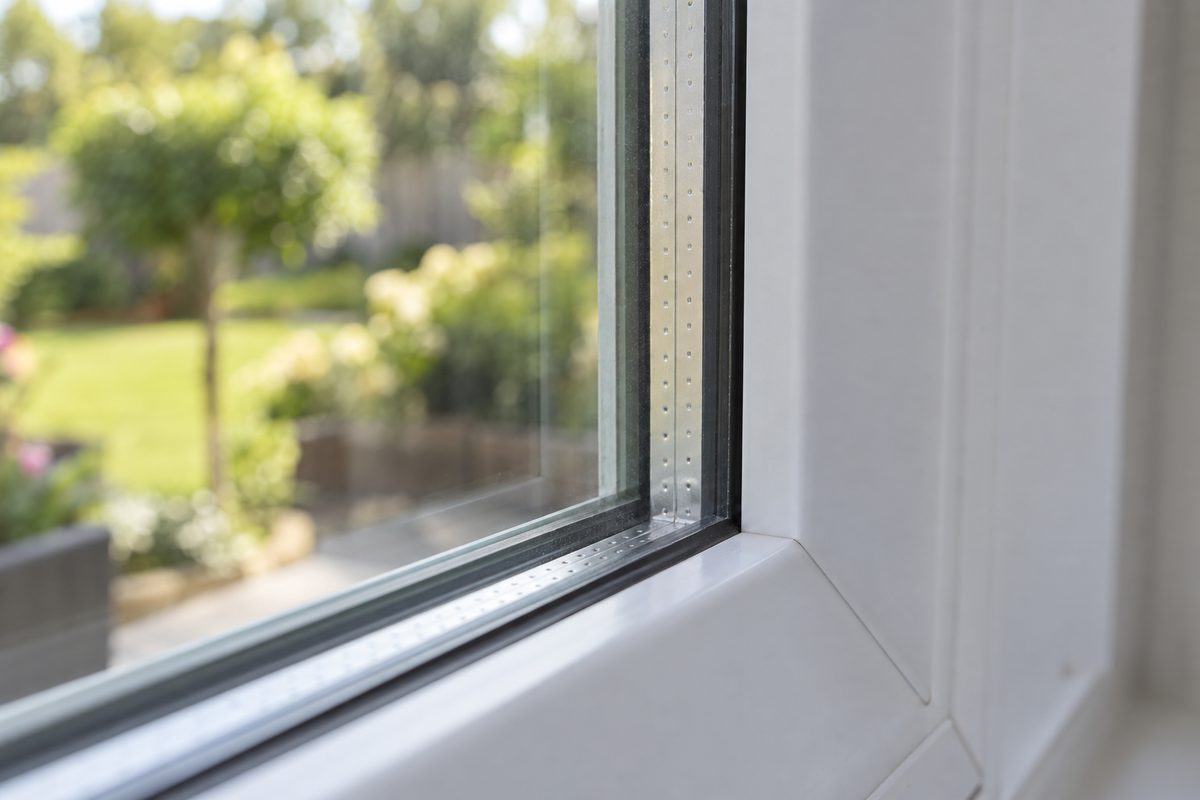
- Low-E glass
- Glass with a "low-emissivity" coating, a microscopically thin layer that reflects some infrared and ultraviolet light while letting visible light through.
- NFRC label
- A label from the National Fenestration Rating Council, a non-profit organization that rates the energy performance of windows, doors and skylights. The label typically lists the U-factor, solar heat gain coefficient and visible transmittance, and sometimes other ratings.
- Permit
- Permission from a local building department to carry out certain kinds of work, such as structural, plumbing or electrical changes. Requirements vary from place to place.
- Punch list
- A list of small items still to be finished or fixed near the end of a project, usually drawn up during a final walkthrough.
- Rough-in
- The stage of a project when pipes, drains, wiring and ducts are run inside walls, floors and ceilings, before they are closed up.
- R-value
- A measure of how well a material, usually insulation, resists the flow of heat. A higher R-value means more resistance.
- Sash
- The part of a window that holds the glass. In a window that opens, the sash is the part that moves.
- Scope of work
- The part of a quote or contract that describes exactly what work will be done. See our guide on comparing contractor quotes.
- Soffit and fascia
- The fascia is the board along the lower edge of the roof, where gutters are often attached. The soffit is the underside of the roof overhang, and it often includes vents.
- Solar heat gain coefficient (SHGC)
- A rating, between 0 and 1, of how much of the sun's heat passes through a window. A lower number means less solar heat comes through.
- Subfloor
- The structural layer beneath the finished floor that supports it.
- U-factor
- A rating of how quickly a window, door or skylight lets heat pass through it. A lower U-factor means it insulates better.
- Underlayment
- A protective layer installed beneath the finished surface. On a roof, it goes over the decking and under the shingles or other roofing. Floors can have underlayment too.
- Vanity
- The bathroom cabinet that holds the sink, usually with a countertop and storage below.
- Visible transmittance (VT)
- A rating, between 0 and 1, of how much visible light passes through a window. A higher number means more daylight.
- Weatherstripping
- Material fitted around the moving parts of windows and doors to seal the gaps when they are closed.
General information only, not professional advice. Every home is different. Talk to a licensed professional about your home before making decisions about any work.