
Replacement windows: the main styles and frame materials
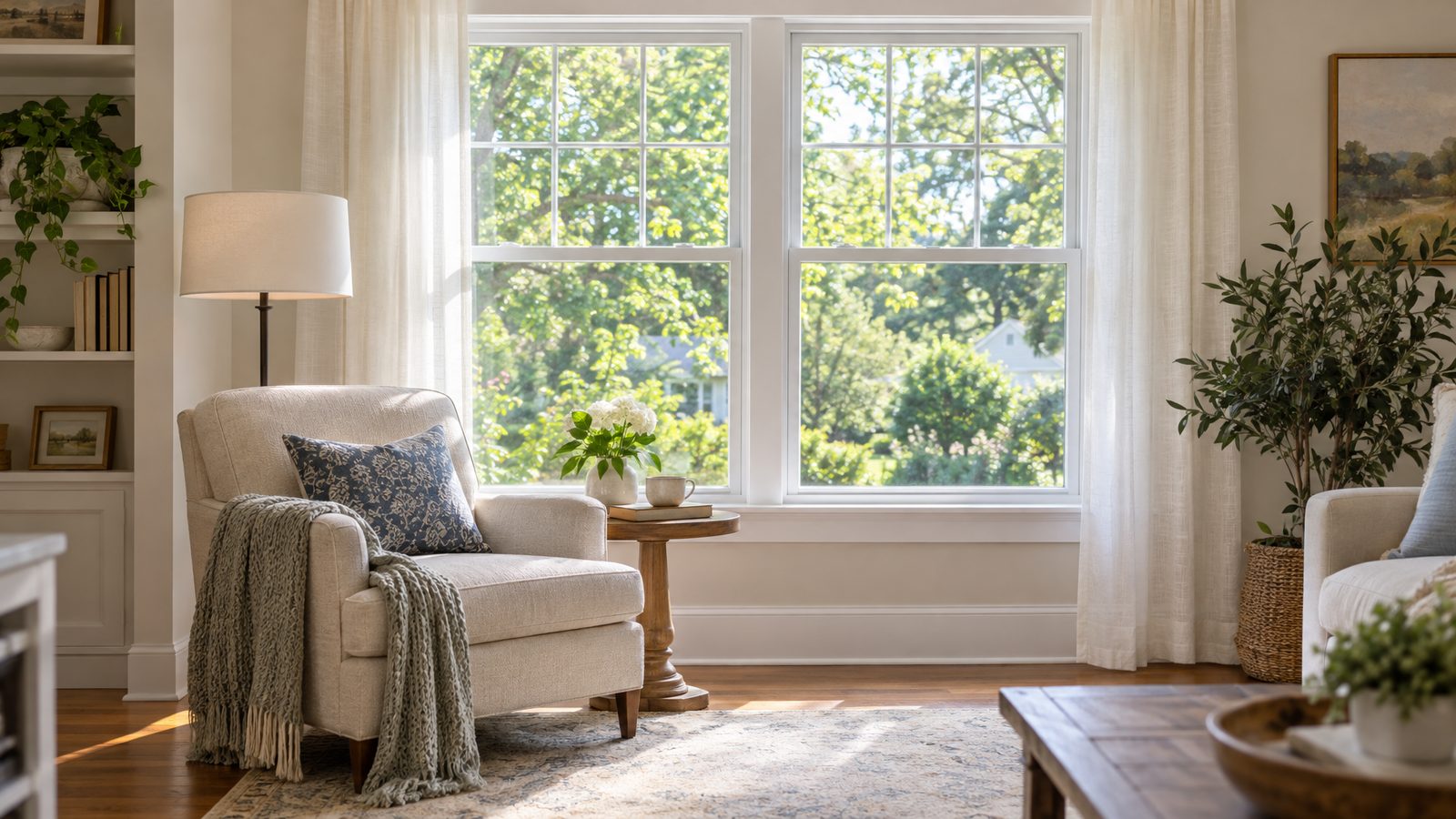
When homeowners start looking into new windows, the first conversations tend to be about two things: the style of the window, meaning how it opens, and the material of the frame. Here is a plain-English tour of both, so the terms in a contractor's quote make more sense.
Common window styles
A window's style describes how it opens, or whether it opens at all. Many homes mix several styles, choosing each one to suit the room and the wall it sits in.
Double-hung
Probably the most familiar style in American homes. A double-hung window has two sashes, the moving panels that hold the glass, and both slide up and down. Many models also tilt inward, which some homeowners like for reaching the outside of the glass from indoors.
Single-hung
It looks much like a double-hung window, but only the bottom sash moves. The top sash stays fixed in place.
Casement
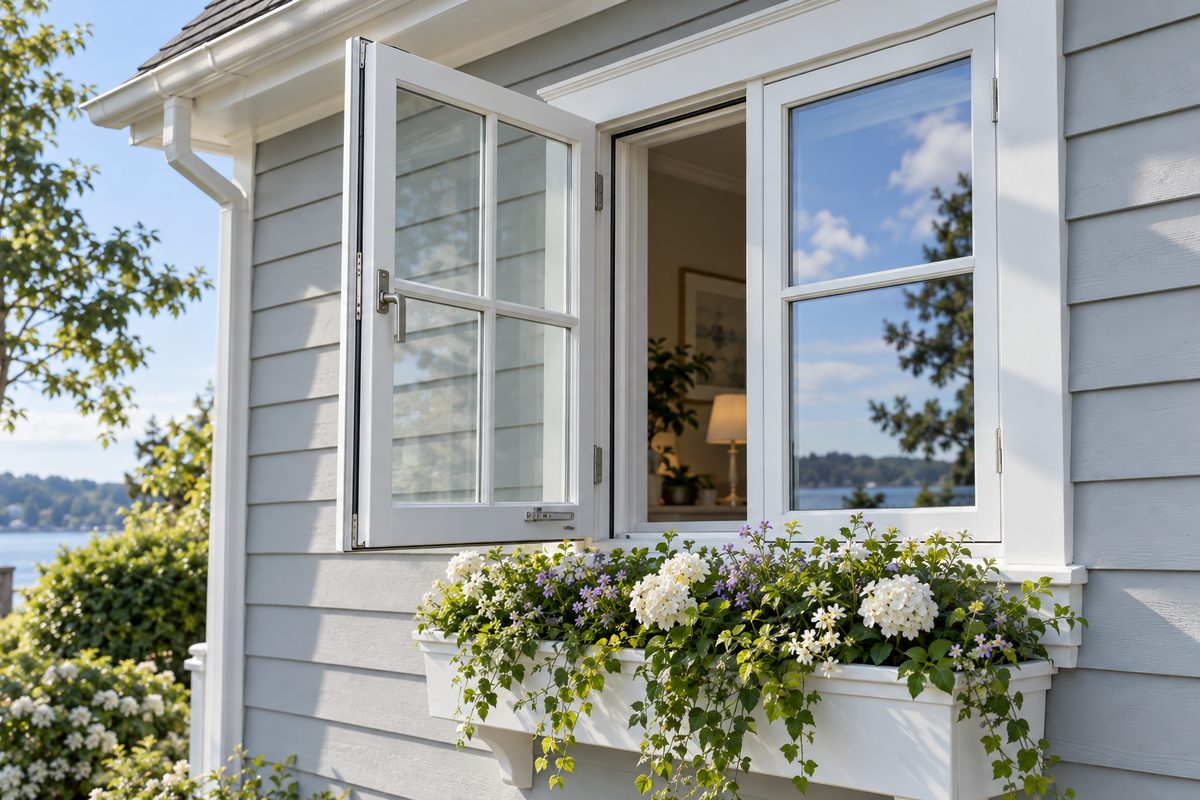
A casement window is hinged on one side and swings outward like a door, usually opened with a crank or a lever. Because the sash presses against the frame when it closes, casements are often described as sealing snugly.
Sliding
Sliding windows move side to side along a track. They are common in wide, short openings and in rooms where a window that swings outward would get in the way, such as beside a deck or a walkway.
Awning
An awning window is hinged at the top and opens outward from the bottom. Some homeowners like them above a kitchen sink or high on a bathroom wall.
Picture windows
A picture window doesn't open at all. It is a single large pane meant to frame a view and let in light, and it is often paired with opening windows on either side.
Bay and bow windows
Both project outward from the wall of the house. A bay window usually has three panels set at angles, while a bow window uses four or more panels in a gentle curve. They tend to be larger projects, because the opening and the structure around it are part of the job.
Frame materials
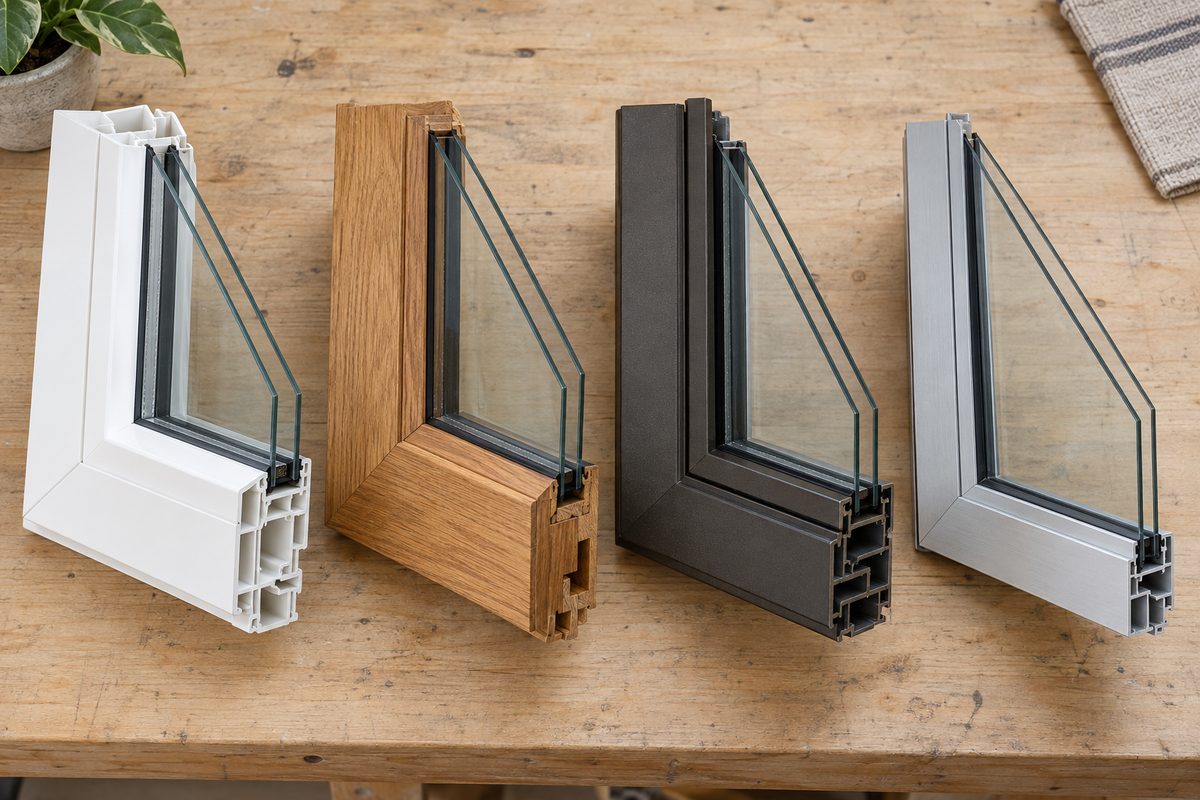
The frame holds the glass and the moving parts. Each material has its own look and its own trade-offs, and contractors often have favorites based on local climate and what they install most.
Vinyl
Vinyl frames are made from PVC. They are widely available, don't need painting, and come in a range of colors, though white and tan are the most common. Vinyl is a popular choice for replacement projects in many parts of the country.
Wood
Wood frames are chosen for their traditional look and the warmth they bring to a room. They can be painted or stained to match a home's trim. Wood generally needs more upkeep than other materials, which is why some manufacturers offer wood windows with a protective cladding on the outside.
Fiberglass
Fiberglass frames are made from glass fibers set in resin. They are known for being strong and stable, and they can be painted. They are often mentioned as a middle ground between the look of wood and the low upkeep of vinyl.
Aluminum
Aluminum frames are slim and strong, which lets them hold large areas of glass. They are common in modern designs and in some warmer climates. Many aluminum frames include a "thermal break", a strip of less conductive material inside the frame.
Composite
Composite frames blend materials, often wood fibers and polymers, in an attempt to combine the strengths of each. What a composite frame contains varies a lot from one manufacturer to another.
A word about the glass
Most replacement windows today use two or more panes of glass with a sealed space between them. You may hear terms such as "low-E coating" or "argon fill" in a quote. Many windows also carry a label from the National Fenestration Rating Council (NFRC) listing measured performance ratings. Our home improvement glossary explains what those terms and ratings mean.
Full-frame or insert replacement?
Contractors usually describe two ways of replacing a window. An insert replacement fits a new window inside the existing frame. A full-frame replacement removes the old window down to the rough opening and installs a complete new unit. Which one suits a home depends on the condition of the existing frames and the walls around them, and that is something a contractor assesses on site.
Questions homeowners often ask a window contractor
- Which styles and frame materials do you install, and which do you suggest for these rooms?
- Is this an insert or a full-frame replacement, and why?
- What exactly is included: removal of the old windows, disposal, trim, and clean-up?
- Does the job need a permit where I live, and who arranges it?
- What warranty comes with the windows, and what covers the installation?
Our guide on how to compare contractor quotes covers what a written quote usually includes.
General information only, not professional advice. Every home is different. Talk to a licensed professional about your home before making decisions about any work.